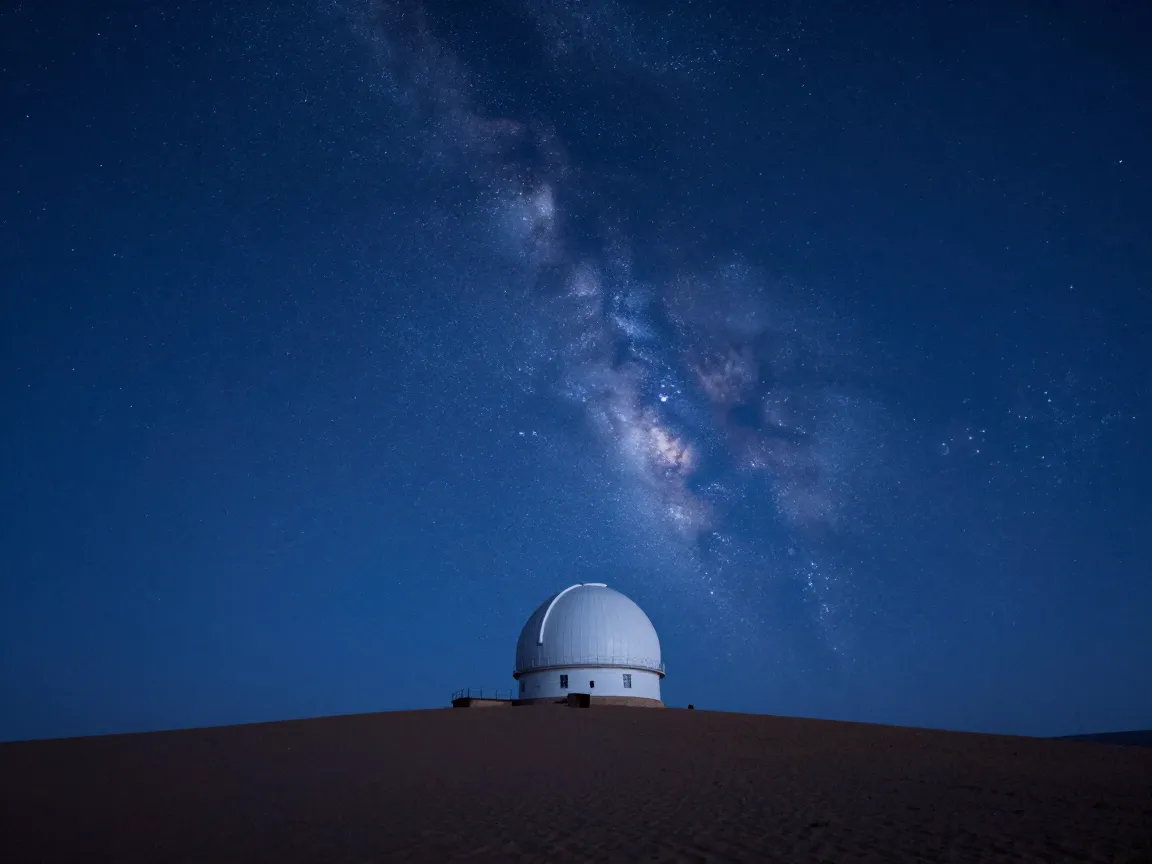
lone observatory dome on a desert ridge under an indigo sky, milky way faint above, wide matte painting, cold moonlight, vast negative space
Vast negative space is a composition request. Ask for space and you get a frame you can put a headline in.
Twenty-six prompts we actually use, each with the reasoning behind it. Copy any of them, change the subject, and keep the structure — the structure is what makes the output repeatable.
26 prompts

lone observatory dome on a desert ridge under an indigo sky, milky way faint above, wide matte painting, cold moonlight, vast negative space
Vast negative space is a composition request. Ask for space and you get a frame you can put a headline in.

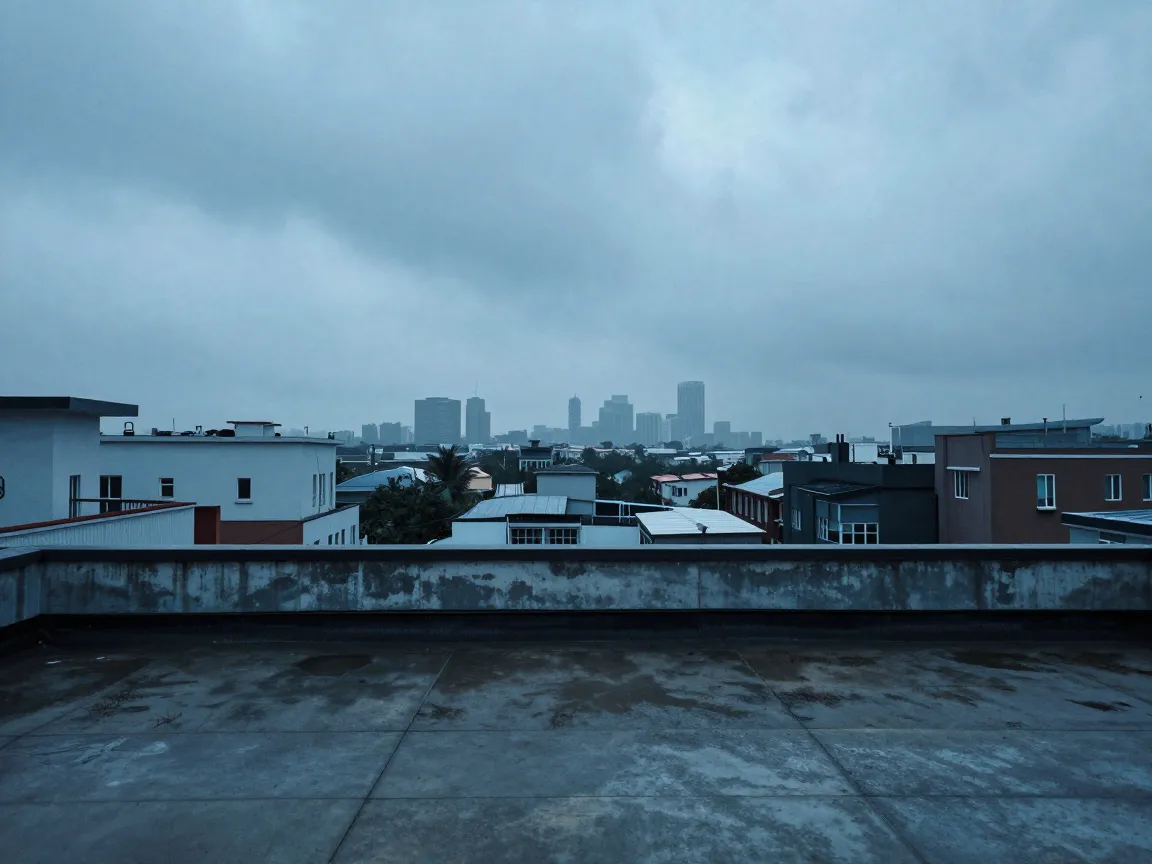
rooftop view of a city under monsoon cloud, wet concrete, cool blue grade, distant skyline soft in haze, 35mm, cinematic still
A single colour grade instruction — cool blue — is more reliable than listing five colours you want.

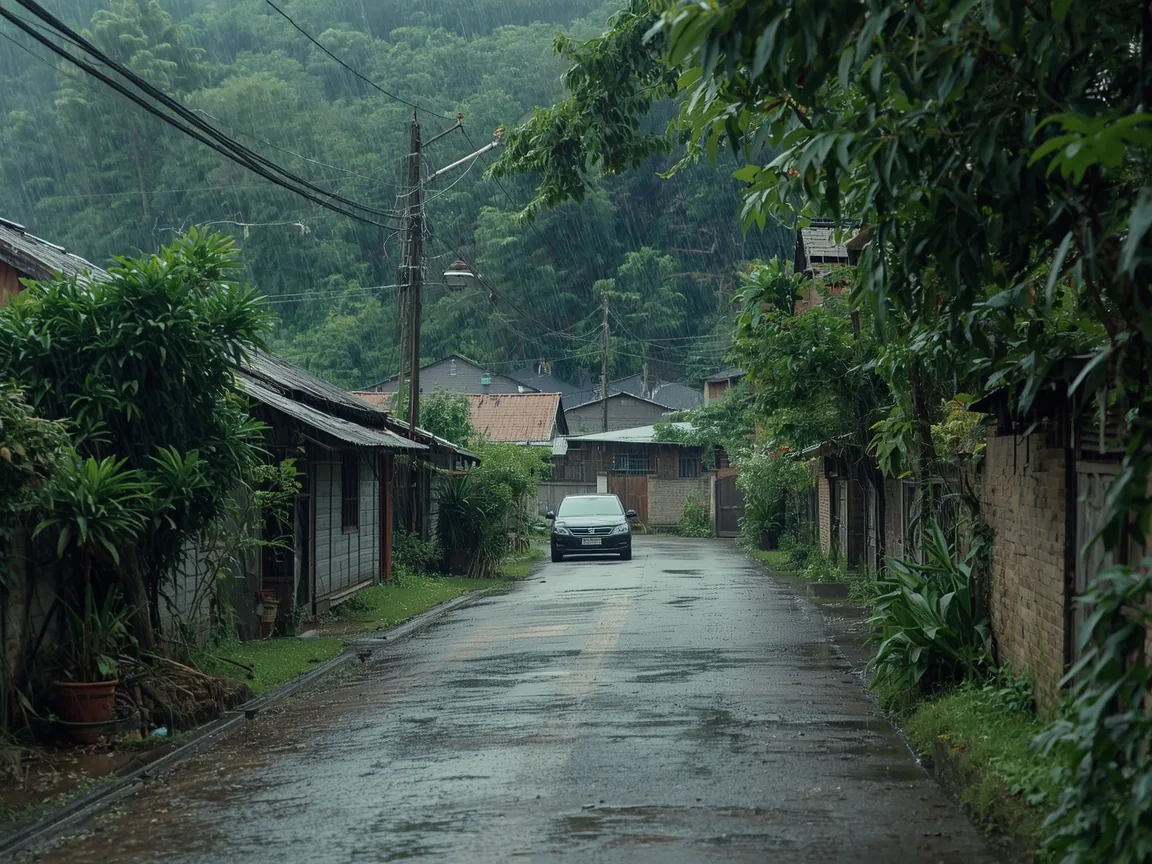
a narrow village lane in monsoon rain, wet asphalt reflecting a pale sky, tin-roofed houses under dense foliage, a forested hillside veiled in rain behind, overcast diffuse light, shot on 50mm
Wet asphalt reflecting tells the model what the ground should do with light. Naming a surface behaviour beats naming the weather.

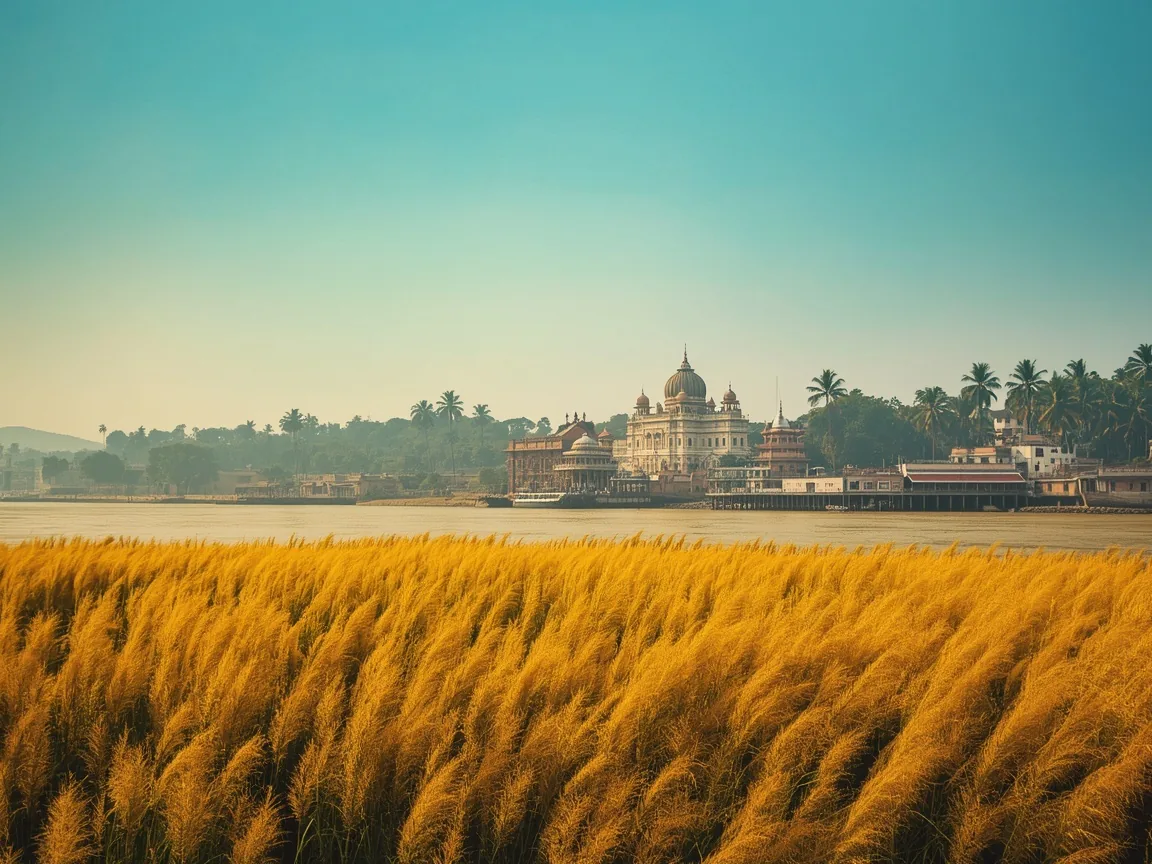
a riverside temple town seen across the water at midday, tall golden kaash grass filling the foreground, domed shrine and ghats on the far bank, palm trees, hazy teal sky, high horizon, travel editorial photography, shot on 70mm
Putting the foreground in the prompt — grass filling the bottom third — is what creates depth. Leave it out and the model renders a flat postcard.

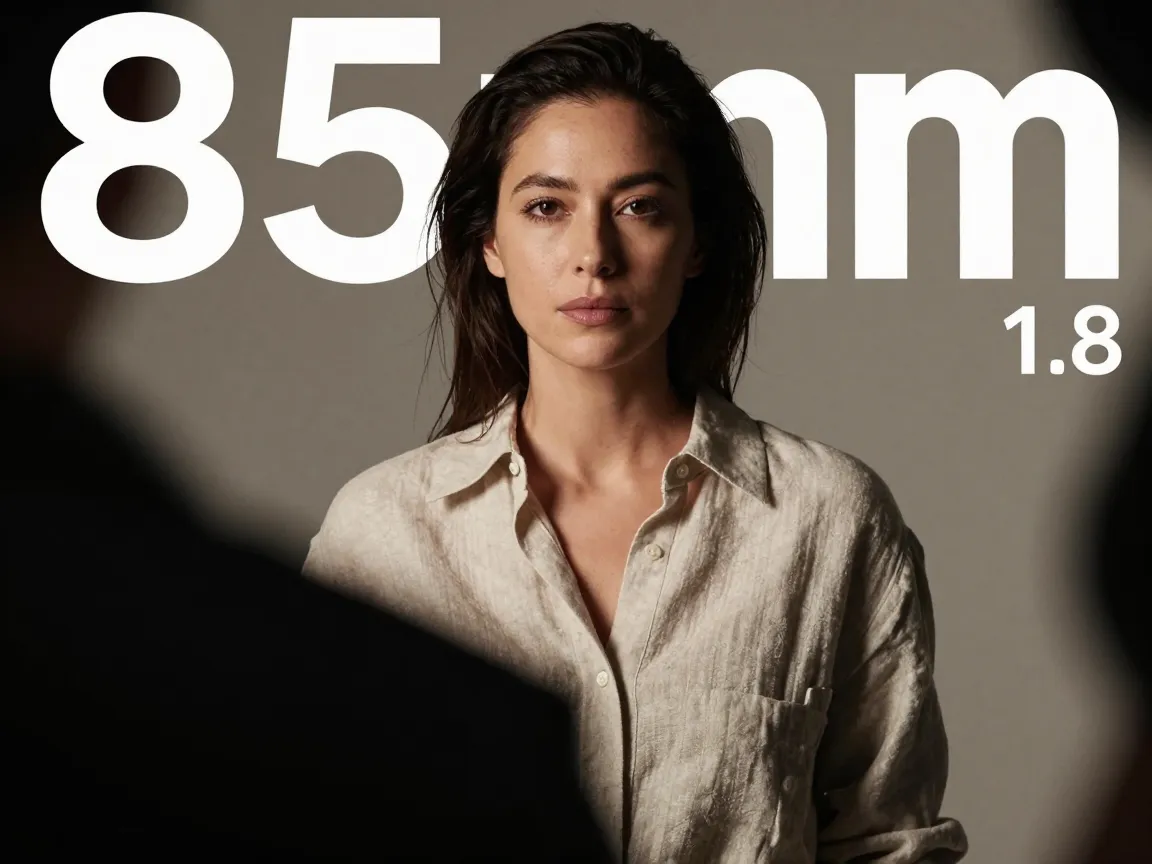
editorial portrait of a woman in a linen shirt, hard rim light from behind, deep shadow foreground, shot on 85mm at f/1.8, magazine cover crop, neutral background
Hard rim light plus deep shadow foreground is a contrast instruction, not a mood word. Contrast instructions survive style changes.

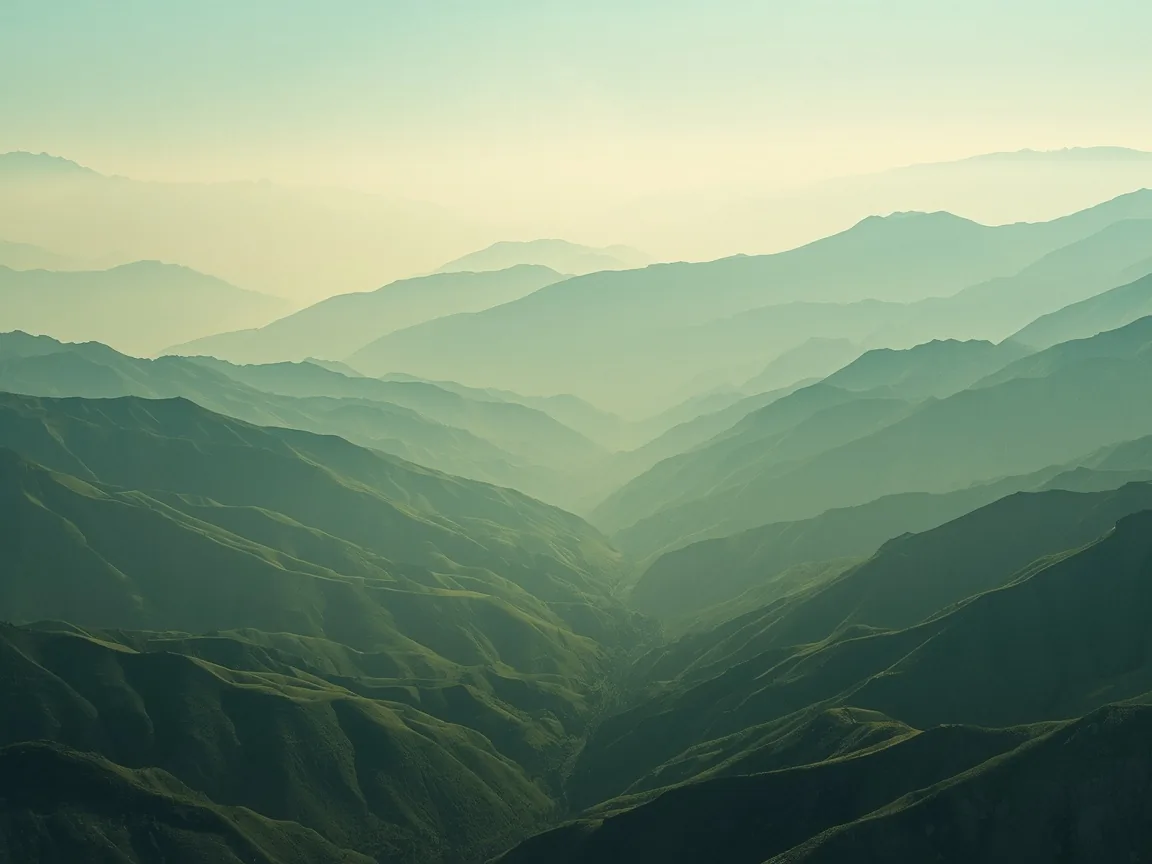
layered valley ridgelines fading into soft haze, early light, aerial perspective, muted green palette, atmospheric depth, large-format landscape
Aerial perspective is the technical term for haze-with-distance. Technical terms land harder than 'dreamy'.

glossy 3D character mascot, rounded soft-body forms, studio HDRI lighting, pastel lilac and cream palette, subtle subsurface scattering, product render
Subsurface scattering and HDRI tell the model which rendering tradition to imitate. That is what makes 3D read as 3D.

matte ceramic tableware set on a linen cloth, diffuse morning light through a window, top-down composition, muted earth palette, editorial food styling
Diffuse plus a light source location gives soft consistent shadow — the thing that makes a set of shots look like one shoot.

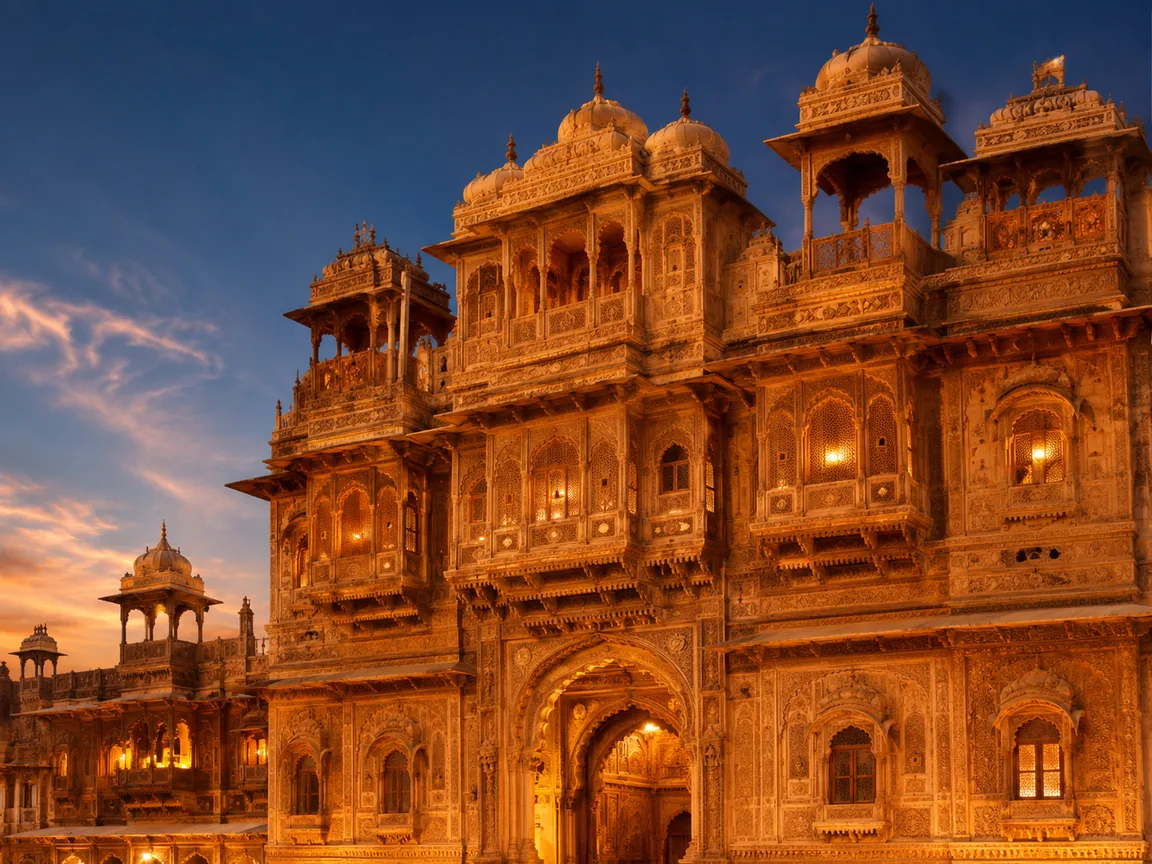
ornately carved sandstone haveli facade at blue hour, tiered jharokha balconies and domed chhatris, warm interior light spilling from every window, deep blue sky with thin cirrus, low angle, architectural photography, shot on 24mm
Blue hour fixes two things in one word — the sky colour, and the warm-against-cool contrast with the lit interiors.

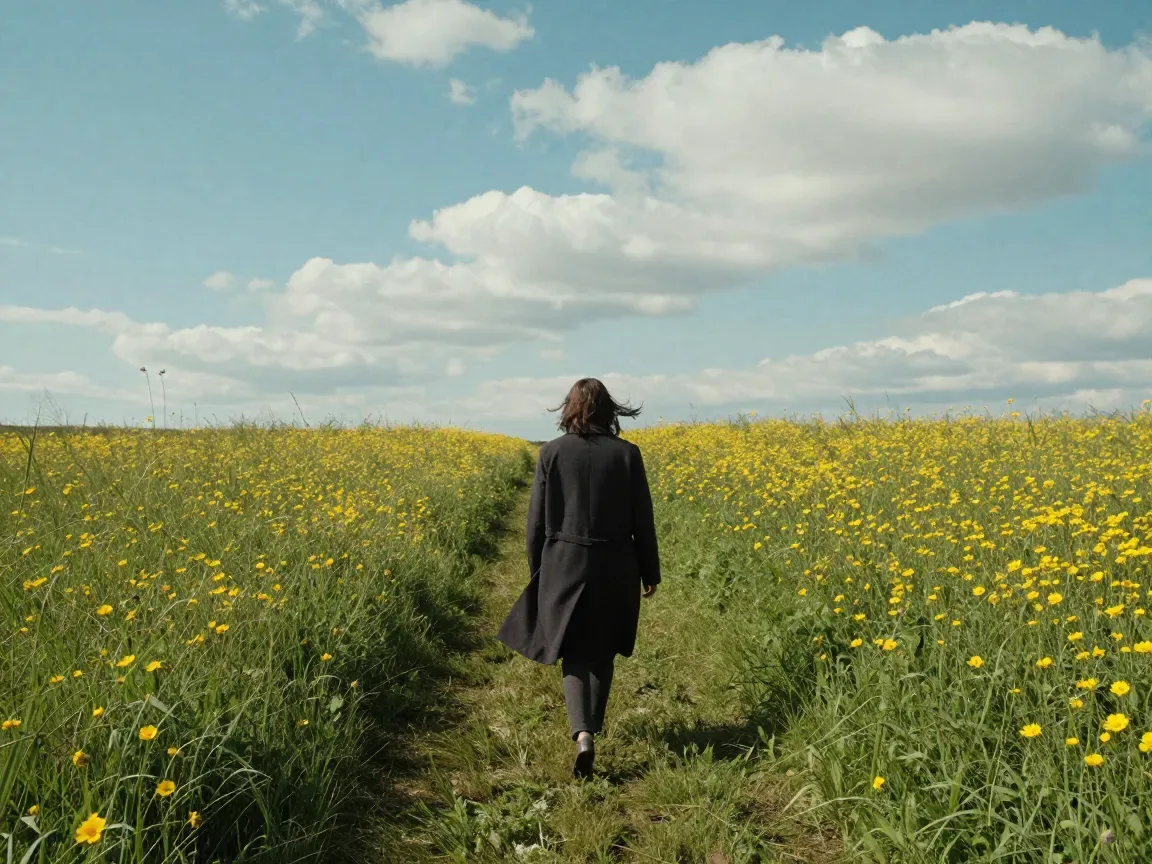
a lone figure in a dark coat seen from behind, walking away along a narrow mown track through a flowering meadow, coat hem catching the wind, wide blue sky, low horizon, soft natural daylight, shot on 35mm
Naming a leading line — the mown track — gives the model something to build the frame around. Structural instructions outrank mood words every time.

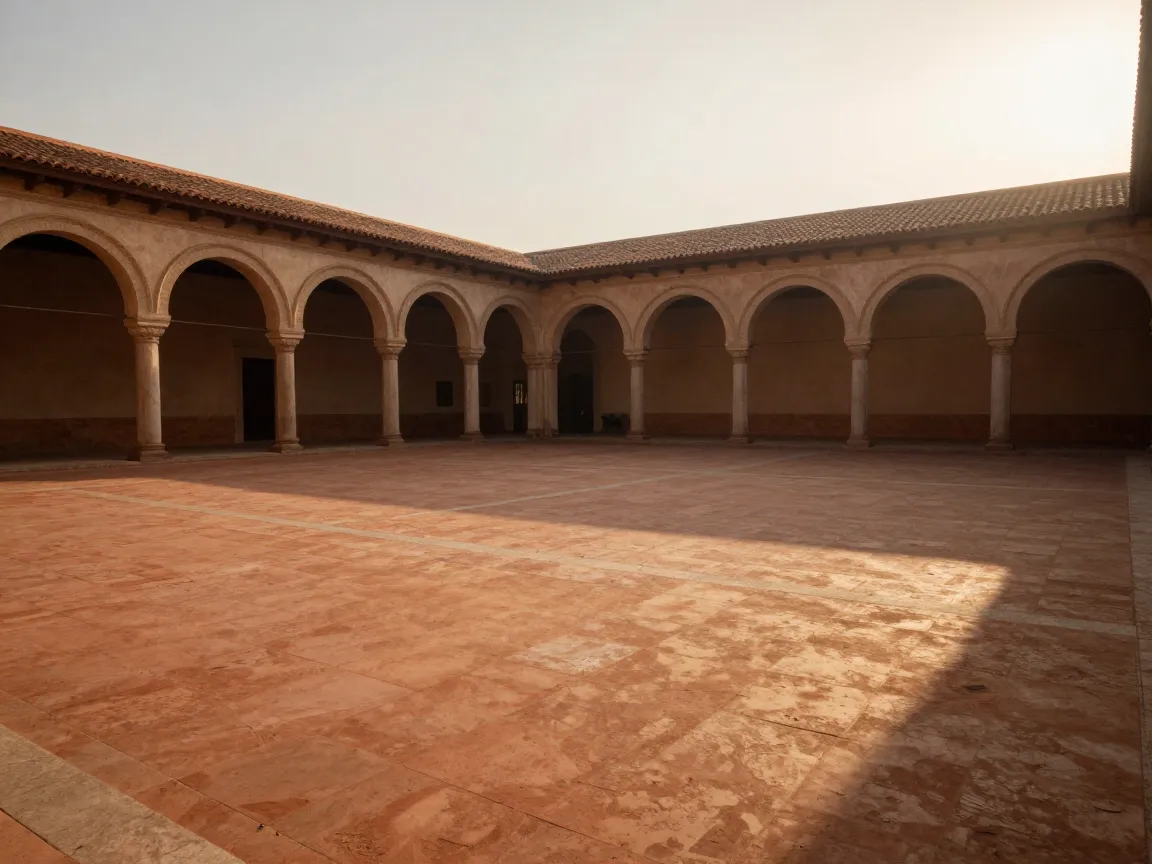
terracotta courtyard at golden hour, long shadows across the floor, arched colonnade receding, 24mm wide, warm haze, architectural photography
Receding gives the model depth to build. Wide focal length plus long shadows is what reads as real architectural work.

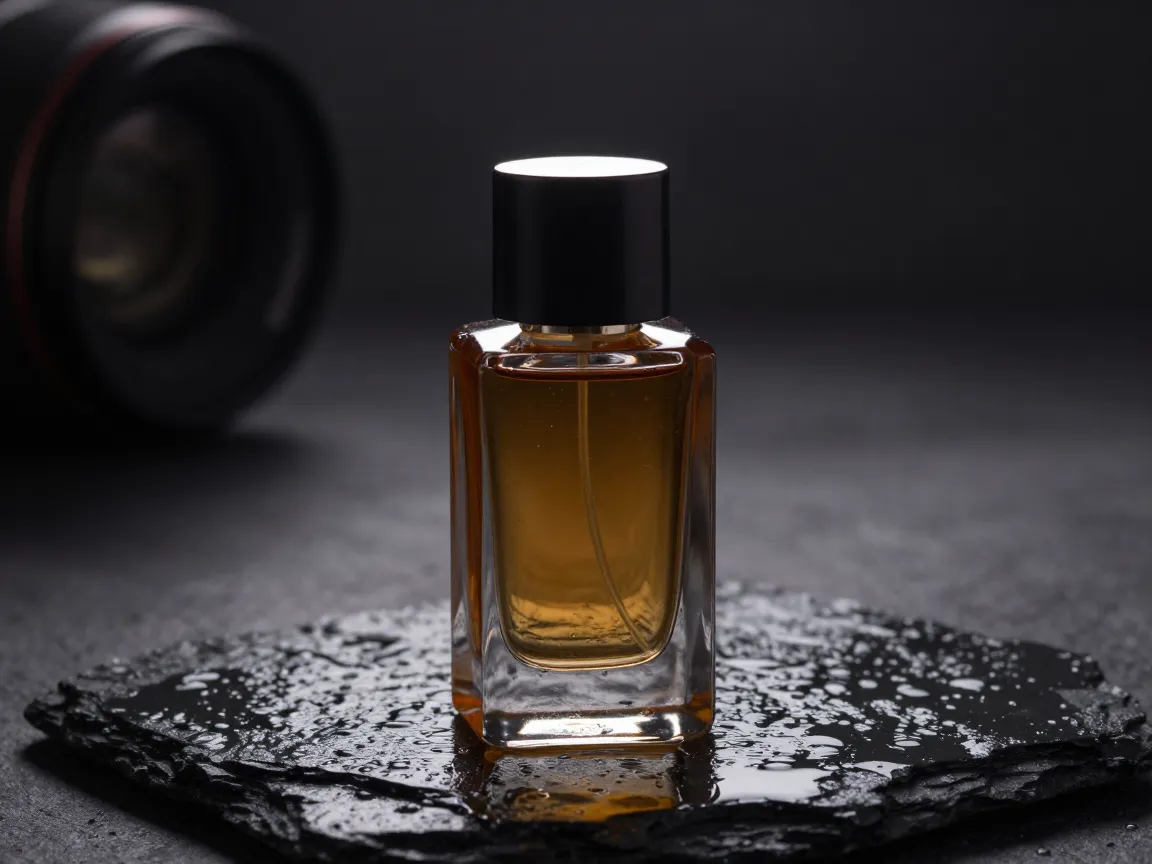
amber glass perfume bottle on wet black stone, soft rim light from camera left, shallow depth of field, 85mm, studio packshot, warm reflections
Names the material twice — amber glass and wet stone — so the model has two reflective surfaces to resolve. The lens and light direction do more work than any adjective.

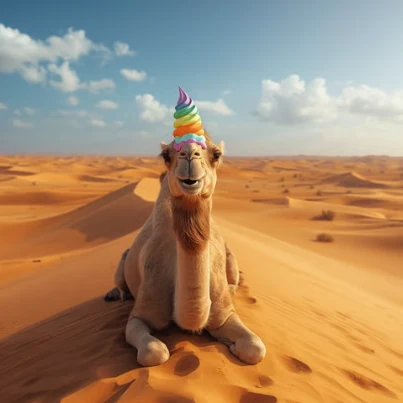
a camel sitting upright on a sunlit dune in a rainbow striped party hat, facing the camera dead on, orange dunes receding to the horizon, small cumulus in a clear sky, midday sun, warm saturated grade, shot on 50mm
Facing the camera dead on is what makes an absurd idea read as a photograph rather than a cartoon. Symmetry buys credibility the subject has not earned.

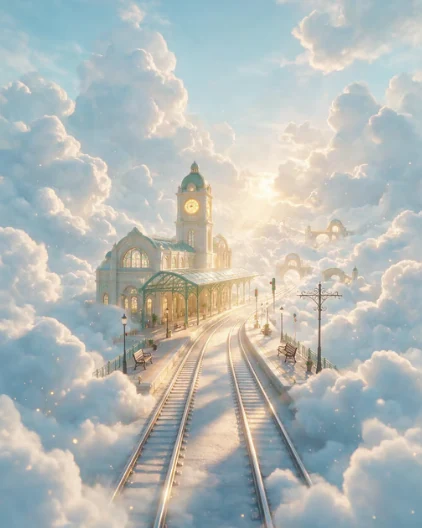
a victorian railway station on an island of cumulus cloud, twin tracks running toward the viewer, clock tower and glass canopy, sun breaking through the bank behind, pale blue and gold, low vantage on the rails, matte painting
Twin tracks running toward the viewer gives the model a perspective line to build on. One converging element does more for depth than any amount of ‘epic’ or ‘majestic’.

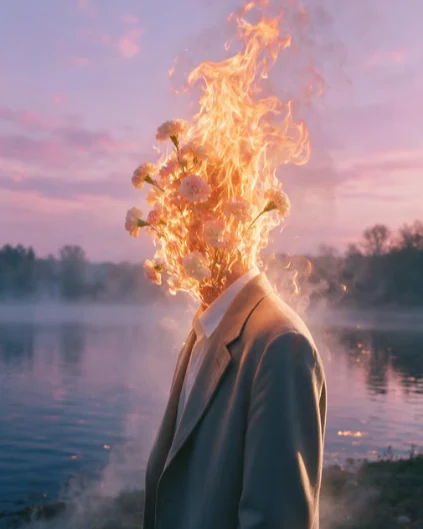
a man in a pale grey suit at the edge of a still lake at dusk, his head replaced by a burst of flame and white carnations, mist on the water, pink and lilac sky, soft even light, shot on 85mm, surrealist fashion
Replaced by is the instruction that makes a surreal swap work. Ask for two things in one place and the model blends them; name the substitution and it commits.

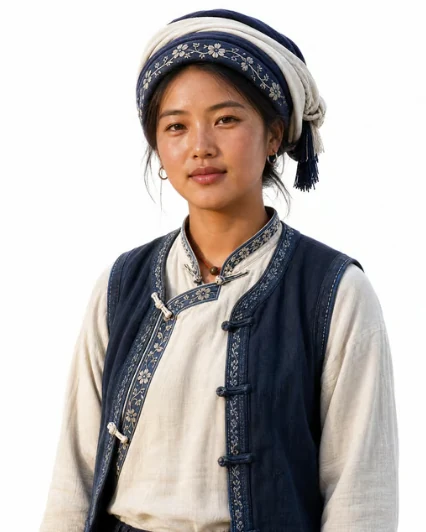
studio portrait of a young woman in an indigo embroidered vest over a cream linen shirt, patterned headwrap tied at the side, plain white background, soft frontal key light, waist-up crop, shot on 85mm, natural skin texture
Natural skin texture is the most load-bearing phrase in portrait prompting. Leave it out and models default to a retouched plastic finish that reads as fake at any size.

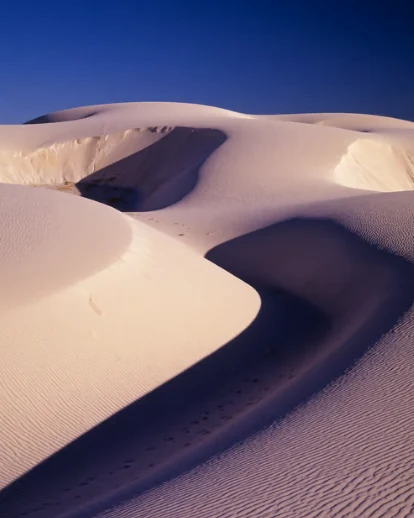
white gypsum dunes at last light, curving crest lines dividing sunlit and shadowed faces, wind ripples in the foreground, deep gradient sky from navy to pale blue, large format landscape, shot on 4x5
Sunlit and shadowed faces says where the light is without naming an hour. Describe the division of light and you get form; name the time of day and you only get colour.

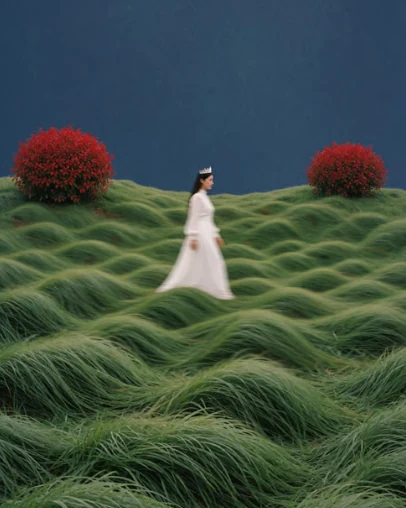
a woman in a long white dress and a small crown walking through wind-combed grass, two round red shrubs flanking her, flat deep blue backdrop, overcast even light, slight motion blur on the figure, fashion editorial
Slight motion blur on the figure is a shutter instruction. Sharpness is a choice, and naming which part of the frame gives it up is what separates a photograph from a render.

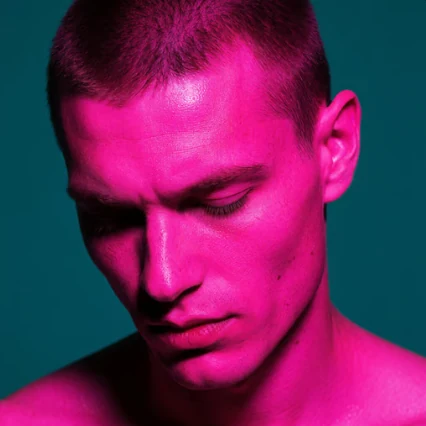
close-up studio portrait of a man with a buzz cut, eyes closed, head tilted down, lit by a single hard magenta light from the upper left, deep teal background, square crop, shot on 100mm macro, visible skin detail
A single hard magenta light from the upper left is a lighting diagram in seven words. Name one source and one direction and every shadow in the frame arranges itself.

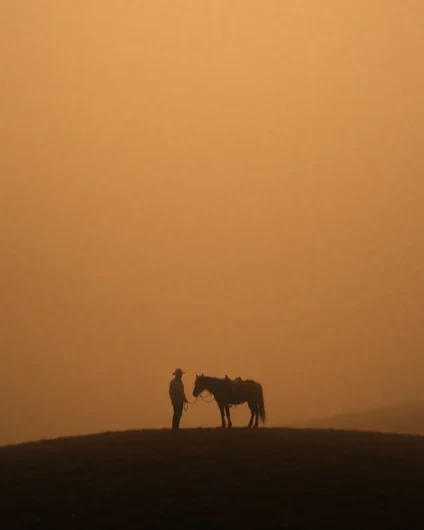
a rider beside a saddled horse on a bare ridgeline, both in full silhouette, thick dust haze with the low sun burning through, the pair small and low in the frame, vast amber sky, warm monochrome grade, shot on 200mm
Full silhouette removes every decision about faces, clothing and detail at once. When the subject is a shape, the only thing left to get right is the light behind it.

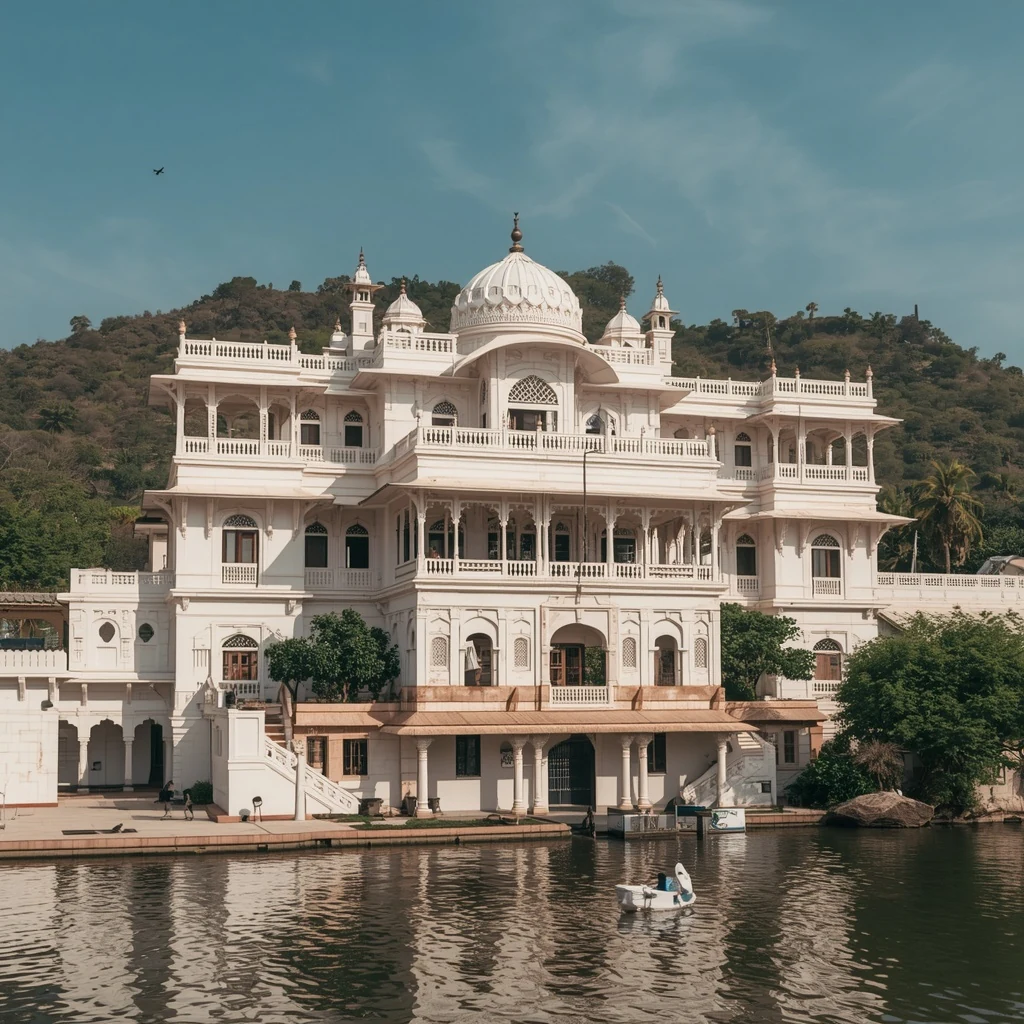
a white marble lake palace seen head-on from the water, carved jharokha balconies and a ribbed central dome, a forested hill directly behind, one boat on the still water, hazy midday light, muted teal sky, shot on 50mm
Seen head-on from the water fixes the camera before it fixes the subject. Decide where the lens stands and the model stops inventing a new angle on every re-roll.

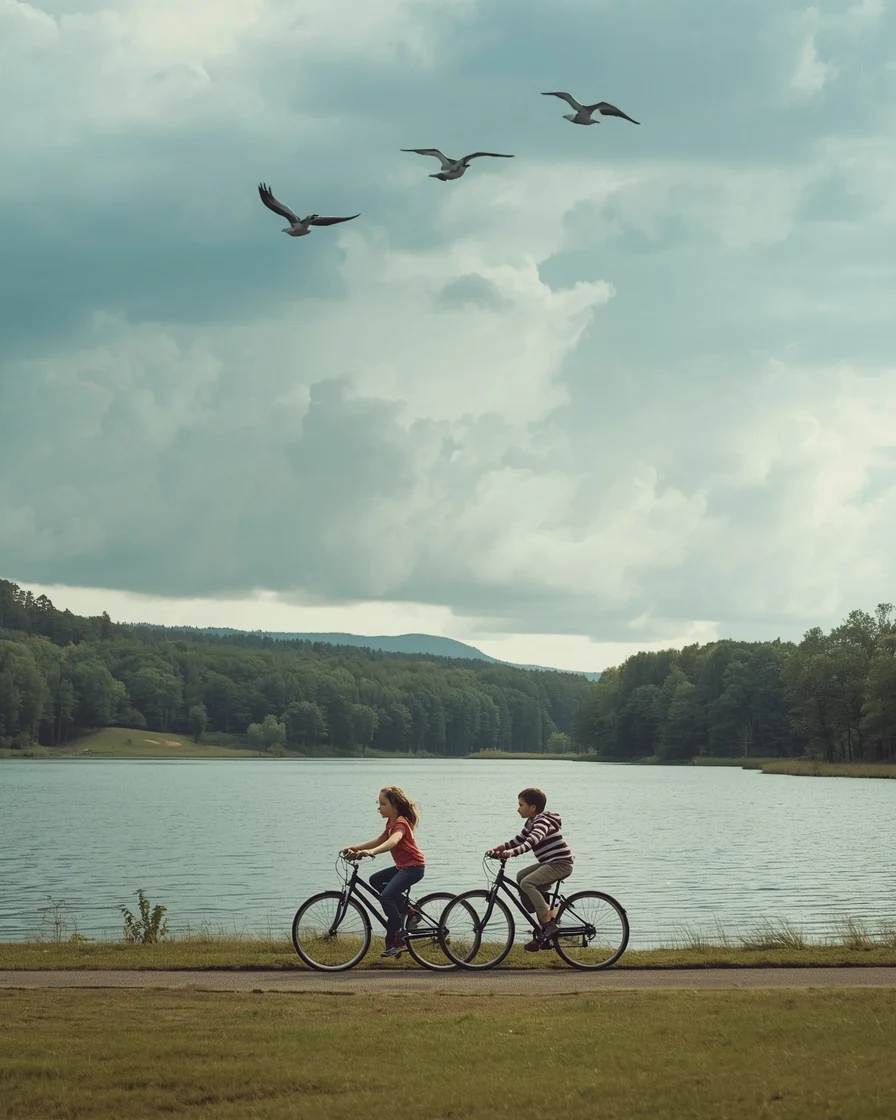
two children cycling a lakeside path, seen side-on and placed low in the frame, still lake and dark treeline behind, gulls high in a bank of cumulus, overcast diffuse light, desaturated teal and olive grade, shot on 35mm
Placed low in the frame hands most of the picture to the sky. Where the subject sits is an instruction the model takes literally, and it is the cheapest way to buy room for a headline.

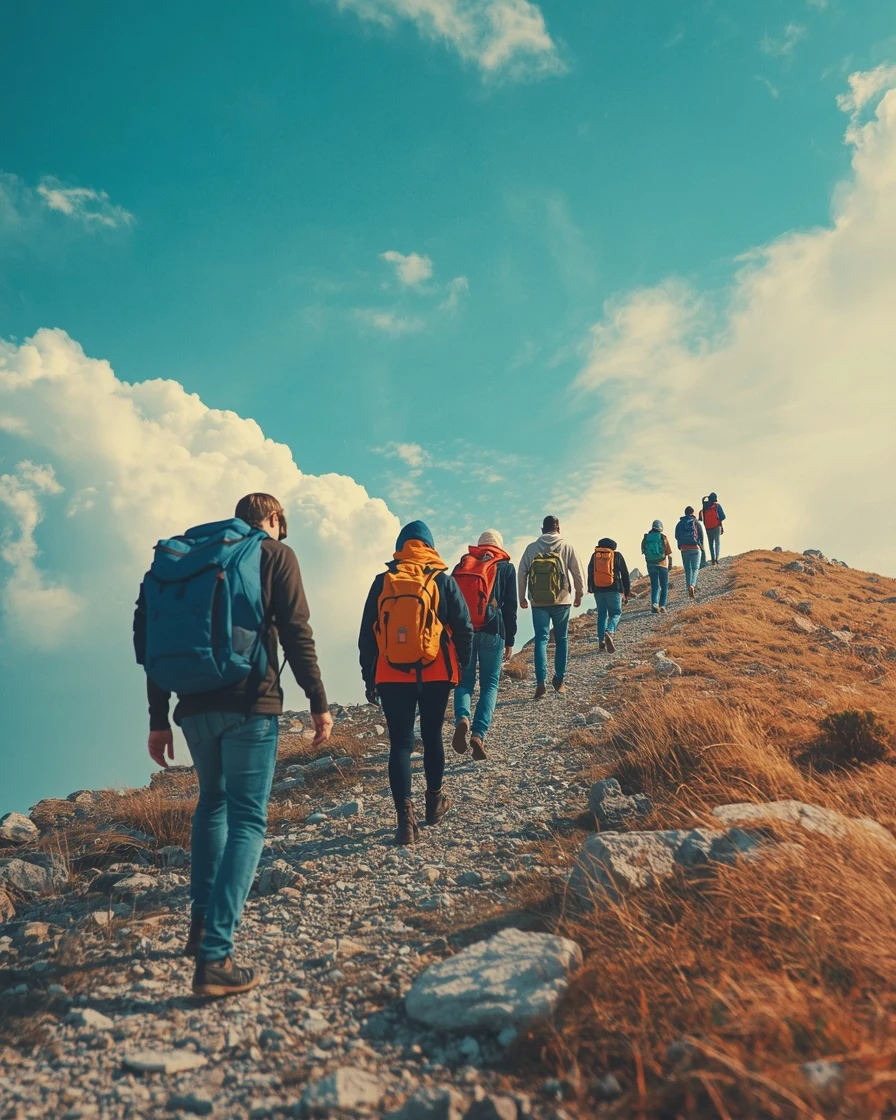
a line of hikers with colourful backpacks climbing a rocky ridge away from the camera, the nearest figure large and the furthest small on the crest, dry golden grass, tall cumulus against deep cyan, low angle, shot on 28mm
The nearest figure large and the furthest small is how you ask for scale. Repeating one subject at diminishing size builds depth that no amount of ‘epic’ will produce.

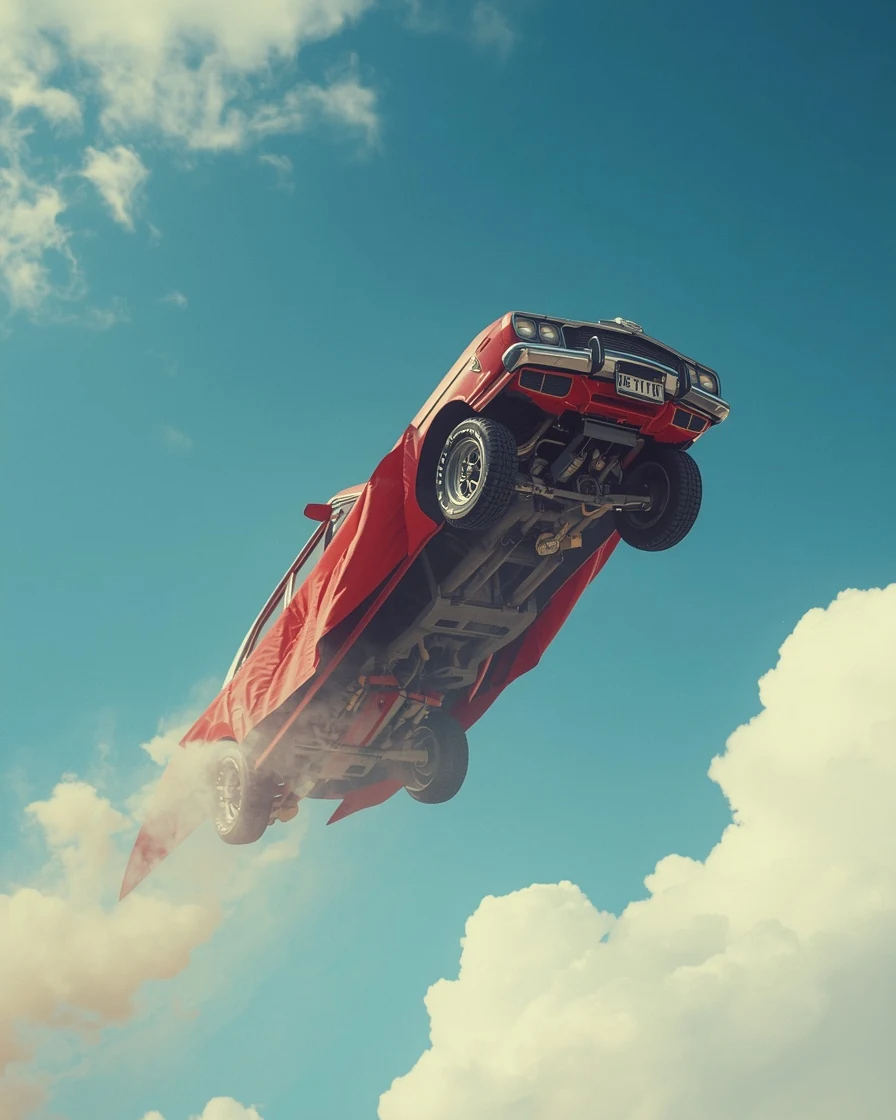
a red 1970s muscle car climbing steeply through the sky, its underside turned toward the camera, a thin vapour trail behind, cumulus below, flat pale cyan sky, hard midday sun, low contrast film grade, shot on 85mm
Underside turned toward the camera is what sells the impossibility. Ask for the angle you could only get if the thing were really airborne and it stops looking like a car pasted onto a sky.

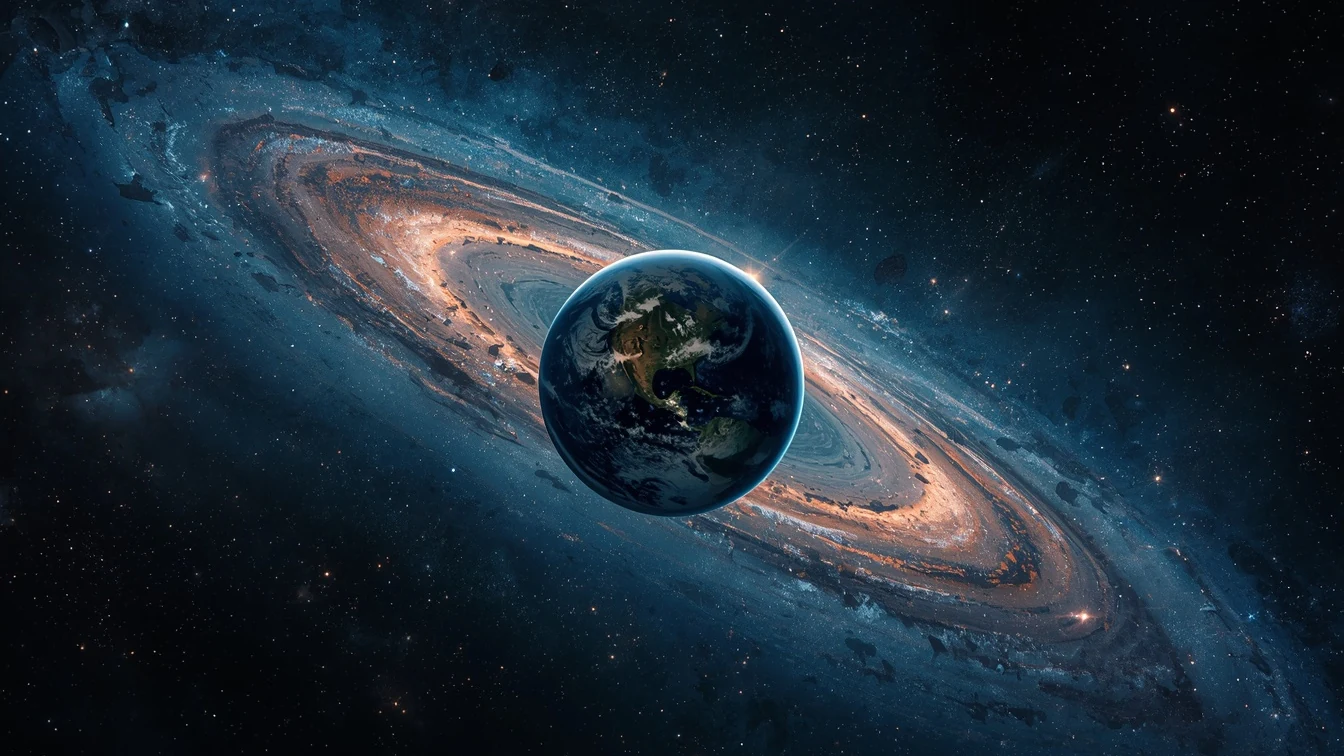
earth suspended before an enormous spiral galaxy seen edge-on, the planet small and lit hard from the right, amber dust lanes wrapping away behind, deep navy-black space, dense starfield, astrophotography composite
Seen edge-on turns a galaxy from a flat disc into a horizon. Naming the viewing angle of the background is what makes the foreground subject feel placed rather than pasted.

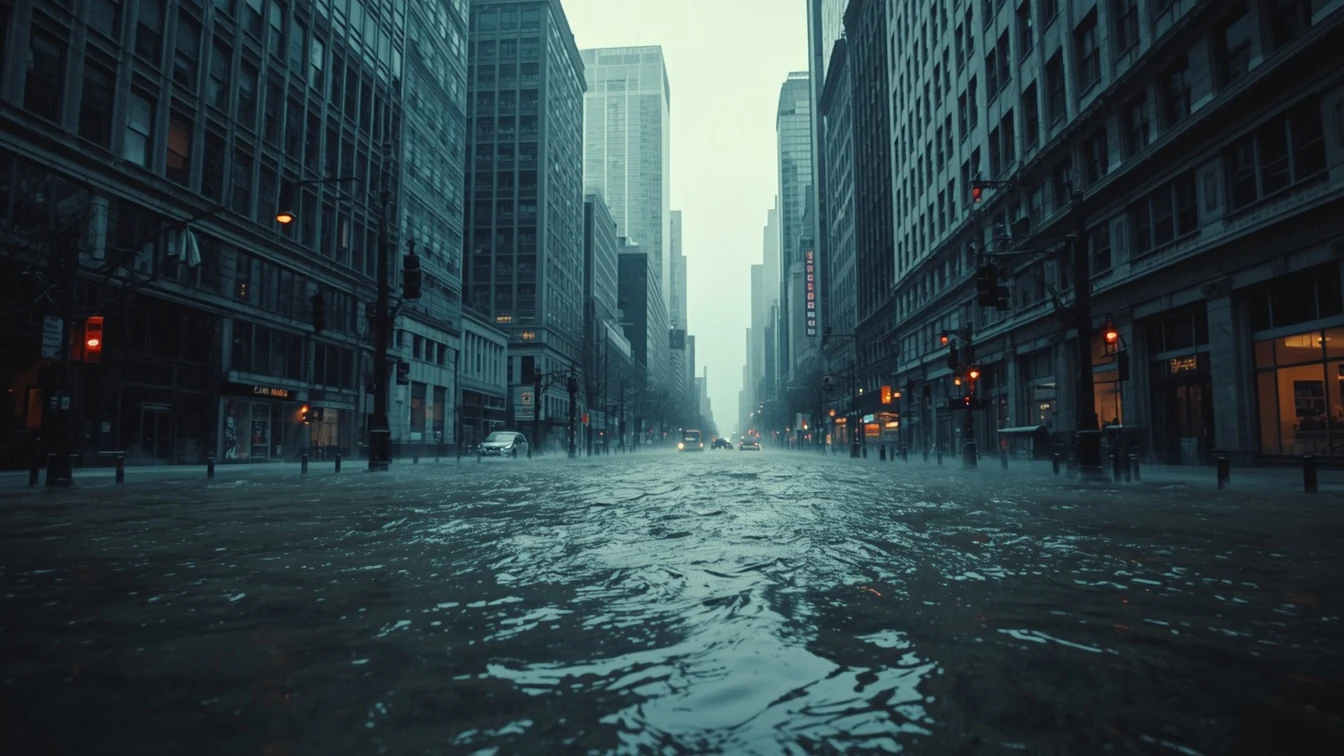
a flooded city avenue at dawn, camera at the waterline so the surface fills the lower half, office towers receding into fog on both sides, red and amber traffic lights glowing, cold desaturated teal grade, shot on 24mm
Camera at the waterline is a height instruction, not a subject one. Tell the model where the lens sits and the flood becomes something you are standing in rather than looking at.
Almost every prompt above is the same sentence with different contents. Fill the slots and you stop guessing.